Teacher Explains
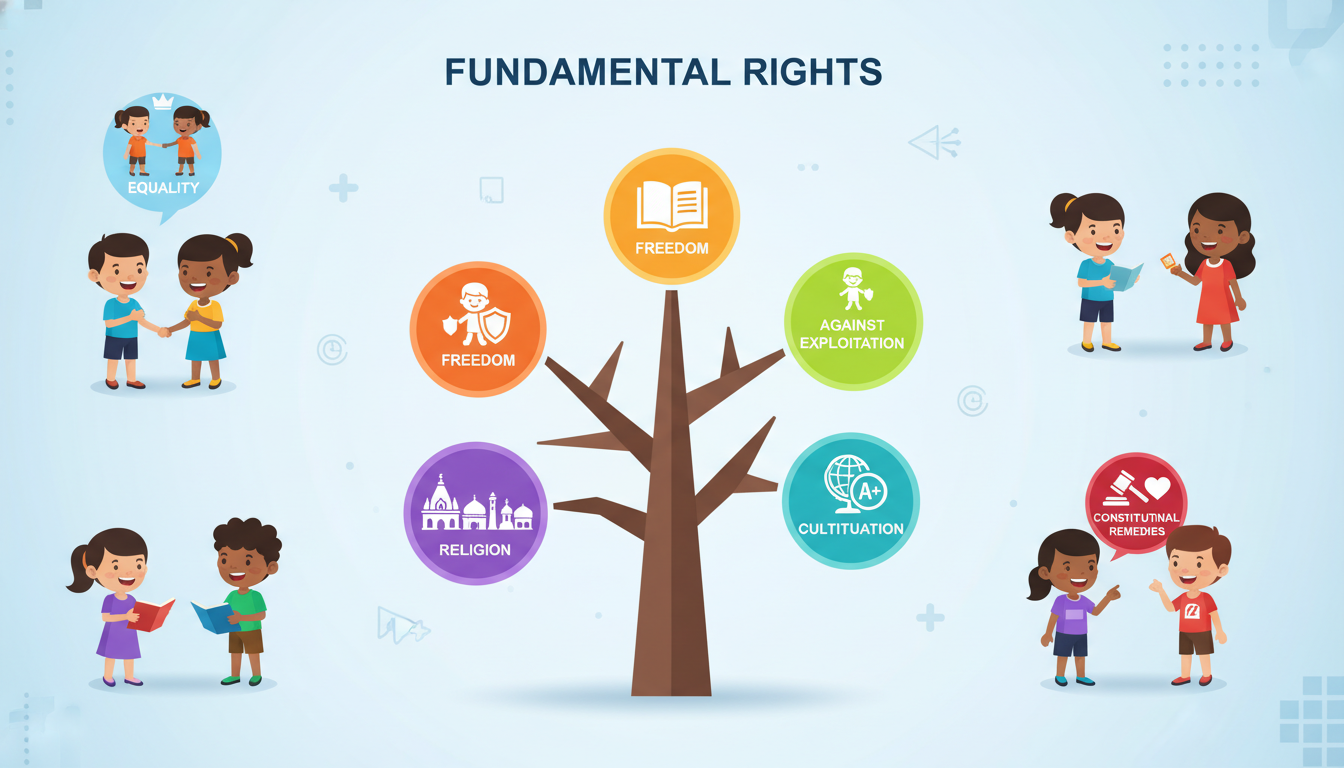
✨ Fundamental Rights
Alright class, let's dive into how the Indian Constitution supports marginalized groups. Recall from our first chapter how the Constitution lays out the principles that make our society democratic. A crucial part of this is the Fundamental Rights, which are for everyone in India.
✨ Marginalized Groups' Use of Rights
Marginalized communities have used these rights in two key ways. First, they've used their Fundamental Rights to get the government to recognize the injustices they face. Second, they've demanded the government actively enforce these laws to protect them. Sometimes, these struggles have even led to new laws that better reflect the spirit of the Fundamental Rights, ensuring greater protection and justice for all.
✨ Article 17: Abolition of Untouchability
Let's look at Article 17: Abolition of Untouchability. This article states that no one can stop Dalits from getting an education, entering temples, or using public facilities. It declares that practicing untouchability is wrong and won't be tolerated. It’s actually a punishable crime now!
✨ Article 15: Prohibition of Discrimination
And then there's Article 15: Prohibition of Discrimination. This one says that no Indian citizen can be discriminated against based on religion, race, caste, sex, or place of birth. Dalits have used this article to fight for equality where it’s been denied. So you see, these articles are powerful tools for marginalized communities seeking justice and equality.